
Whose Fence is it anyway?
Global warming has brought with it a whole long list of fresh problems for us to address in an attempt to reduce our carbon footprint. We need to consider a future with electric vehicles (EVs) rather than those propelled by fossil fuels - think about how we provide heat and light to our homes – do we install a heat pump when replacing a faulty gas boiler? The list of challenges goes on, but it is the changes to our climate that bring more day-to-day problems, with heavy rain causing flooding and frequent storms, severe enough to be given names, resulting in structural damage to property and infrastructure. Much of the more frequent storm damage is covered by our property insurance, however there are exceptions, one being our garden fence which may not be covered for damage caused by a storm.
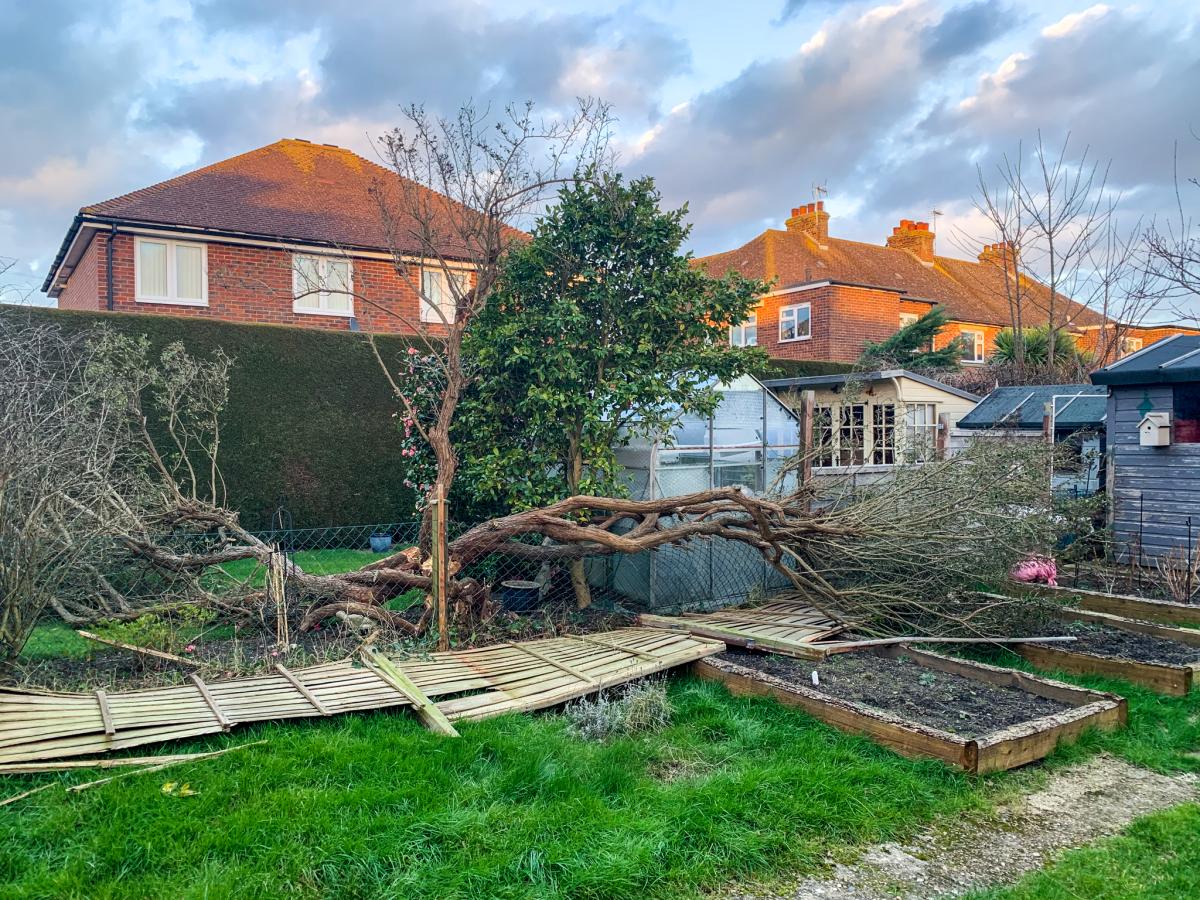
Most modern properties being built today are erected on plots separated by wooden fences rather than the brick walls used in the past and these are not as substantial as their predecessors. Some in fact, are not all that strong and do not stand up well to storm force winds, particularly as wooden upright posts begin rot and fail at their bases. As the instances of falling fences becomes more of a problem, the question who does the fence belong to and more to the point, who is going to pay for the repair or replacement?” is being asked much more frequently. It is not uncommon for home insurance policies not to cover wooden boundary fences against storm damage so in many instances the owner of the fence will be liable for the cost of repairs to storm damaged fence.
That being the case, it is becoming more important to ascertain the ownership of boundary fences. There is a common belief that the fence to the left, as you look out into your garden, is your responsibility and the one to the right belongs to your neighbour. However, there is no hard or fast rule to cover this so that may not always the case. There are generally two distinct sides to a wooden fence, the one which shows the posts and bracing strips on the panels and a flush side which does not. If the flush side faces into your garden, it is often assumed to be yours. Once again, there is no hard and fast rule meaning this might not always be the case so best to check.
A survey carried out in the UK found that over half of those surveyed (58.9 per cent) have been involved in a dispute with a neighbour over a broken fence and whose responsibility it is to repair it. This was found to be the most common reason for disputes between neighbours, which would suggest that it would be wise to do some research and try to avert any future disagreement which would cause animosity with neighbours.
The easiest place to start investigation of boundary fence ownership if you own your property, is with the deeds to your property. When you buy a property, you or your solicitor will receive a copy of the deeds, which show the legal ownership of the property and a title plan which shows the extent of the plot and the approximate boundaries. Against the boundary walls and fences you will often see either a “T” symbol or an “H” symbol. A “T” symbol denotes where the ownership of the fence lies. If it appears on your side of the boundary line, the fence belongs to you and if it shows on the opposite side, it means that the ownership of the fence lies with your neighbour. An “H” symbol which straddles the boundary denotes joint ownership and responsibility for the structure.
If you cannot find these documents in your old paperwork from the house purchase, you can either contact the solicitor who was responsible for the conveyancing during the purchase or contact the Land Registry which registers the ownership of land and property in England and Wales (https://www.gov.uk/government/organisations/land-registry) and request copies, or in Scotland, contact the Land Register of Scotland (https://www.ros.gov.uk/our-registers/land-register-of-scotland).
It is worth checking these documents to see if there is a Boundary Agreement included. Unfortunately, there is no garden fence law or rule in England and Wales that stipulates who owns the boundaries of a plot. A Boundary Agreement shows agreement between neighbours as to who owns and therefore has responsibility for the repair and maintenance of boundary walls and fences. If one does not exist, it might be worth agreeing boundaries with your neighbours and sending that to the Land Registry to be included in the deeds for avoidance of doubt in the future. There is a fee of £90 to have this registered at the Land Registry and it is always a good thing in such matters to have advice from a solicitor.
Once the ownership of fences and walls has been established, it should be borne in mind that any changes or alterations such as painting, adding brackets, flower pots or panels to add height to any fence or wall should first be agreed with the owner. If a title plan or boundary agreement already exists but you think it is wrong or inaccurate, you can apply to correct it by writing to your appropriate Land Registry stating why you think it is inaccurate and include any relevant documentation which might corroborate your claim.
Although there is no garden fence law or rule in England and Wales there may be conditions written into the deeds for the property which stipulate where responsibility for maintenance of the boundaries have been allocated. If there is no stipulation in the deeds, your neighbour may not be under any legal obligation to make any changes or repairs to the fence. If however a boundary wall or fence deteriorates to the stage that it appears dangerous, you should make your neighbour aware. If they are not willing to repair it, you can report a dangerous wall or structure using the GOV.UK website https://www.gov.uk/report-dangerous-building-structure As with any issues between neighbours, the best way to resolve boundary issues is to talk to your neighbour and try to resolve them amicably.
If you are thinking of buying or selling your home, you may find some of these services useful: