
Charging Ahead with an Electric Vehicle (EV)
Had we not been made aware of Climate Change and the effects of burning fossil fuels, it is doubtful if we would be obsessing about renewable energy sources in the way we appear to be. We would probably still be happy with our North Sea Oil and imported Gas, with the oil being refined and used as diesel or petrol to power our cars, buses and trains and the gas fuelling our power stations to generate our electricity.
Having been made aware of the effect our fossil fuel burning has had on the earth’s atmosphere, times have changed and our attitudes and habits with them. The world is switching to renewable energy sources. The emphasis is now on wind and solar and these are truly renewable, in as much as the wind always blows and the sun always shines, but using the resultant electricity doesn’t create carbon dioxide or methane, the two major contributors to the greenhouse gases threatening our planet.
As we replace fossil fuels and move to renewable electricity as a direct replacement, we create a different problem, that of balancing our electricity generated with our electricity usage, both in overall Kilowatt Hours (KwH) and how and when we use our electricity.
In terms of electricity usage, the major change we see is the number of electric vehicles on our roads. This number is set to increase substantially over the next five to ten years as sales of new fossil fuelled cars will be banned in Europe, bringing with it a surge in demand for electricity. At present around 52% of our electricity is generated from low carbon sources with 43% from renewables and 13% nuclear.
Around 33% of our electricity is still generated from fossil fuelled power stations and the demand on these created by electric vehicles will also increase. Having an electric car, which typically costs around 35% more than its petrol equivalent and to have its battery charged with electricity generated by a gas fired power station seems to rather defeat the purpose of the exercise.
Like most culture changes, our transition from fossil fuelled power generation will not happen overnight. As a country we are aiming initially to generate most of our energy from renewable sources and use gas fired power stations only as a backup for periods of peak demand. As we build more wind farms and solar farms the dependency on fossil fuels will diminish although it is likely we will ultimately retain a number of small nuclear power stations as wind and sun are not consistent in their output.
As the technology used in the batteries of electric vehicles evolves, there is one other option to be considered, and that is to utilise what is known as bidirectional charging. In other words, using the vehicle battery as a power pack to feed stored power back into the grid at times of high demand, then allowing the battery to recharge when demand is low, during the night for example when most of us are asleep.
Very few car manufacturers are currently offering the facility of bidirectional charging but more are now looking at the technology. Sadly, as with most new technologies, manufacturers will look to recoup their development costs and this will inevitably add cost to the vehicle being offered with that technology. As stated earlier, with the cost of electric vehicles already around 35% higher than a petrol or diesel equivalent, manufacturers may be loath to add further cost to their models. There will come a tipping point where manufacturers are seeing the market demand for bidirectional charging growing to a level where they will need to meet that demand.
It is judged that electric vehicles only spend roughly a third of the time they are connected to the grid, actually pulling power from it. Very often they are fully charged but still connected, which gives them the opportunity to provide charge back to the grid. This technology many still be at an early stage but realistically the development costs have to be less than the cost of building new power generation infrastructure to cope with peaks in demand.
The other major benefit of evolving battery technology is that electric vehicles are now able to cover more miles per charge. This means that more journeys will come within the range of the vehicle, meaning fewer stop-offs at expensive public chargers, resulting in less traffic using public charge points. When combined with the fact that more public charge points are being added every week, this should ease the fears of many motorists that there are not enough charge points available as well as cutting down the ongoing cost of charging.
The purchase price of an electric vehicle may be higher than one with an internal combustion engine but if properly managed the running costs can be substantially lower. The largest component of running cost is the fuel and when charged using an EV Tariff at home, the cost of charging is much lower than the cost of filling up with petrol or diesel. Add to that the lower cost of servicing – one service every two years- due to the lack of moving parts saving on road tax, potential saving on insurance and savings of somewhere between £400 and £1,000 per annum should be achievable.
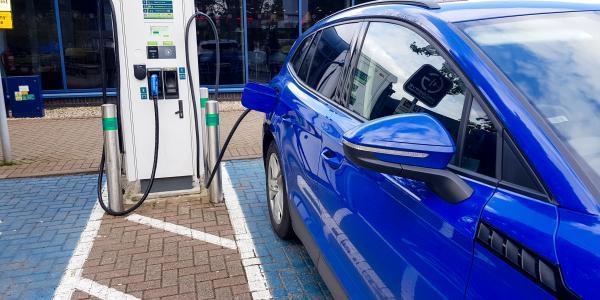
Charging has always been one of the main perceived hurdles standing in the way of electric vehicle ownership but the market is changing as is the technology around charging. A fast or rapid charger at a public charge station will take 30 mins to one hour to fully charge an electric vehicle, less if the vehicle still has a level of charge when it is plugged in. ZapMap say that as of the end of June 2024, there were 64,775 electric vehicle charging points in the UK, spread across 33,829 charging locations with 20,367 having been installed since June 2023.
In the same way as petrol or diesel cars have a fuel gauge to tell you how much fuel you have in your fuel tank, an electric car has a gauge on the dashboard which tells you how much charge you have left in your battery. All you have to do is watch that gauge, pull in to a charging station, plug in, grab a coffee, quick visit to the loo and you’re good to go again.
If you are thinking of buying or selling your home, you may find some of these services useful: